Late payments are a common problem for freelancers, small businesses, and service providers. When clients delay payments, it can affect cash flow and make it difficult to pay employees, suppliers, and other business expenses. Many businesses spend valuable time following up with customers instead of focusing on growth.
One of the best ways to solve this problem is by using automated invoice reminders. These reminders help businesses communicate with clients at the right time without requiring manual effort. They encourage customers to pay on time while maintaining professional relationships.
In this article, you will learn how automated invoice reminders work, why they are effective, and how they can help reduce late payments. You will also discover best practices for creating reminders that improve your chances of getting paid faster.
Why Late Payments Are a Serious Business Problem
Late payments can disrupt the normal operations of a business. Companies depend on steady cash flow to meet daily expenses and invest in future opportunities. When payments arrive late, businesses may struggle to manage their finances effectively.
Business owners often spend hours contacting clients through emails and phone calls to request payment updates. This extra work takes time away from serving customers, improving products, or finding new opportunities for growth.
Repeated late payments can also increase stress and create uncertainty. Small businesses are especially vulnerable because they may rely on a few important clients. Finding ways to reduce delayed payments should therefore be a priority for every business owner.
What Are Automated Invoice Reminders?
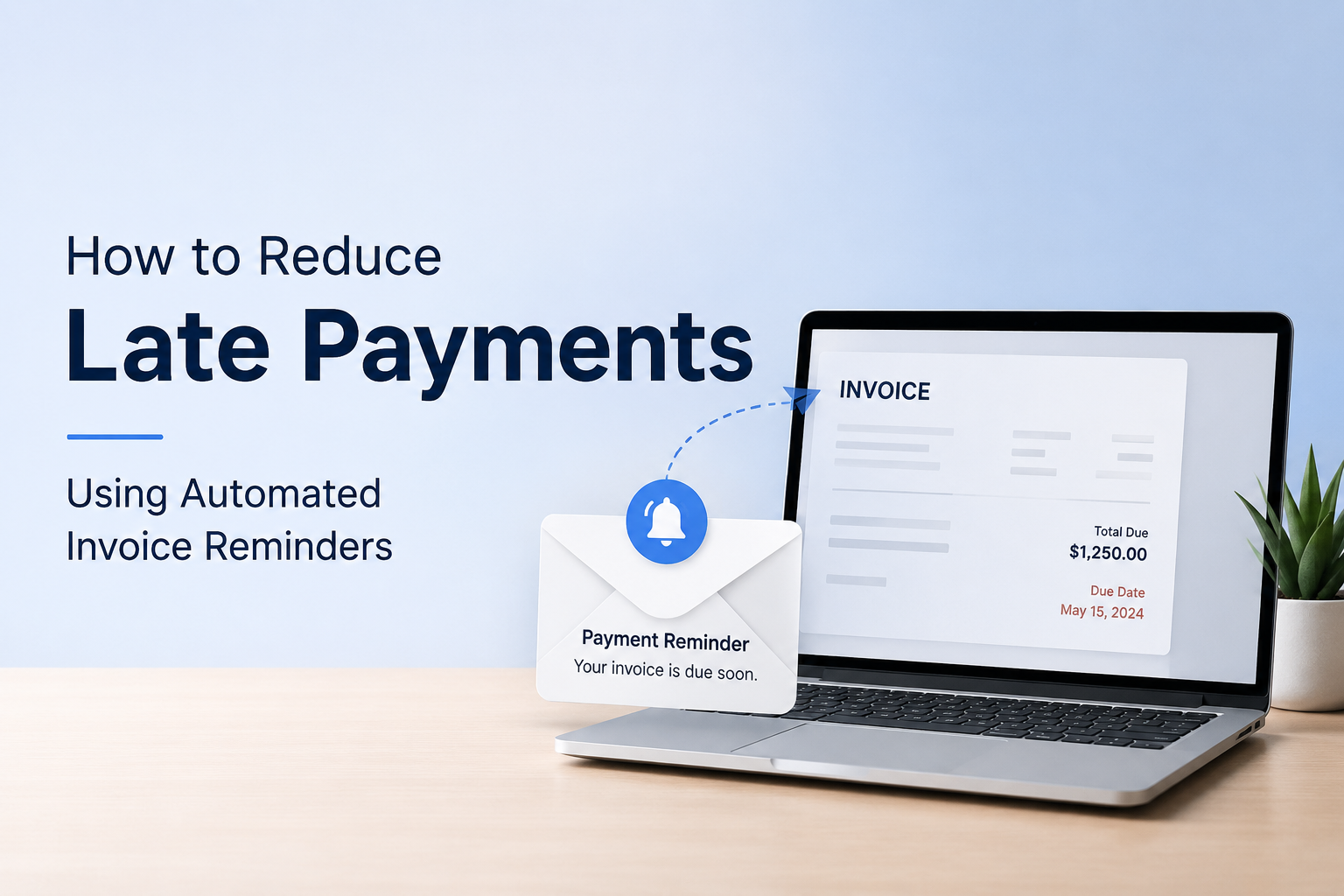
Automated invoice reminders are scheduled notifications sent to customers regarding upcoming or overdue payments. These reminders are usually delivered through email and can be customized based on the business's preferences and payment terms.
Instead of manually tracking every unpaid invoice, businesses use software to automatically send reminders at specific times. For example, reminders may be sent a few days before the due date and again after the payment deadline passes.
The goal of automated reminders is simple. They keep invoices visible in the customer's mind and encourage timely action. Since many late payments happen because clients forget, these reminders can significantly improve payment behavior.
How Automated Reminders Improve Cash Flow
Consistent cash flow allows businesses to operate smoothly and plan for future growth. Automated invoice reminders help businesses receive payments faster, reducing the time invoices remain outstanding after their due dates.
When clients receive reminders before deadlines, they are more likely to schedule payments promptly. Early reminders provide enough notice for customers to prepare funds and avoid accidental delays caused by oversight or busy schedules.
Faster payments mean businesses have more money available to cover operating costs and pursue opportunities. Improved cash flow also reduces dependence on loans or emergency funding, creating greater financial stability over time.
Choosing the Right Timing for Invoice Reminders
Timing plays an important role in the effectiveness of invoice reminders. Sending reminders too frequently may annoy customers, while sending them too late could reduce their impact on payment behavior.
Many businesses send an initial reminder several days before the due date. Additional reminders may be scheduled on the due date itself and a few days afterward if payment remains outstanding.
Finding the right balance requires understanding your customers and payment patterns. Testing different schedules can help determine which approach leads to faster payments while maintaining positive business relationships with clients.
Writing Professional Reminder Messages
The language used in invoice reminders should remain professional, respectful, and clear. Customers are more likely to respond positively when reminders are polite and focused on resolving the payment matter efficiently.
A reminder should include important details such as the invoice number, amount due, due date, and available payment methods. Providing clear information reduces confusion and helps customers complete the payment process quickly.
Avoid using aggressive language in the early stages of communication. Many customers simply forget to pay. Maintaining a courteous tone preserves trust and increases the likelihood of future business opportunities together.
Personalizing Reminders for Better Results
Personalized communication often performs better than generic messages. Including the customer's name and specific invoice information can make reminders feel more relevant and less like automated notifications sent to everyone.
Businesses can also tailor reminder schedules based on customer history. Reliable clients may require fewer reminders, while customers with repeated delays might benefit from additional follow-up communications before and after due dates.
Personalization demonstrates attention to detail and professionalism. Clients appreciate businesses that understand their needs and communicate thoughtfully, which can strengthen relationships while encouraging more consistent payment behavior over time.
Making Payments Easier for Customers
Sometimes clients pay late because the payment process is inconvenient or confusing. Businesses can reduce delays by offering simple payment methods and providing clear instructions within invoice reminders.
Including payment links in reminder emails allows customers to settle invoices immediately after opening the message. This convenience reduces friction and eliminates unnecessary steps that could discourage prompt action.
Businesses should also accept multiple payment options whenever possible. Different customers prefer different methods, and flexibility can increase the likelihood of receiving payments quickly and without unnecessary complications or misunderstandings.
Using Technology to Automate the Process
Modern invoicing software has made it easier than ever to automate payment reminders. Businesses can schedule reminders in advance and allow the system to manage follow-up communications automatically.
Solutions such as BillingNow offer features that simplify invoicing and reminder management. These tools help businesses stay organized while ensuring customers receive timely notifications regarding outstanding payments and approaching deadlines.
Automation reduces administrative work and minimizes the risk of human error. Instead of tracking dozens of invoices manually, business owners can focus on providing value to customers and growing their operations.
Monitoring Results and Adjusting Strategies
Businesses should regularly review the effectiveness of their invoice reminder systems. Tracking metrics such as payment times and overdue invoice rates can reveal whether current strategies are delivering positive outcomes.
If reminders are not producing the desired results, adjustments may be necessary. Businesses can experiment with different message wording, schedules, or payment options to determine what works best for their customer base.
Continuous improvement is essential for long-term success. Small changes in communication practices can lead to significant reductions in late payments and create a more efficient billing process for everyone involved.
Preventing Late Payments Before They Happen
Reducing late payments starts before an invoice is even issued. Businesses should establish clear payment terms and discuss expectations with clients at the beginning of every professional relationship.
Invoices should be accurate, detailed, and sent promptly after work is completed. Delays in invoicing can contribute to delayed payments, as customers may prioritize other financial obligations in the meantime.
Setting expectations early creates accountability and reduces misunderstandings. When customers understand payment deadlines and consequences, they are more likely to fulfill their obligations according to the agreed schedule.
Building Strong Client Relationships Through Communication
Good communication strengthens trust between businesses and their clients. Invoice reminders should be viewed as part of an ongoing relationship rather than a confrontational attempt to collect money.
Businesses that communicate consistently and respectfully often experience fewer payment issues. Clients appreciate transparency and professionalism, especially when businesses address concerns quickly and provide helpful assistance when questions arise.
Even when following up on overdue invoices, maintaining a positive attitude can preserve valuable relationships. Long-term customers contribute to business success, making respectful communication an important investment in future opportunities.
In Summary
Late payments can create significant challenges for businesses of all sizes. Fortunately, automated invoice reminders provide a practical and effective solution for encouraging customers to pay on time. By sending timely notifications, businesses can improve cash flow, reduce administrative tasks, and strengthen client relationships.
Success with automated reminders depends on using the right timing, maintaining professional communication, and making payments as simple as possible. Businesses should also monitor results and continue refining their strategies to maximize effectiveness.
Tools like BillingNow can support these efforts by helping businesses automate invoicing processes and streamline reminder management. With the right approach, automated invoice reminders can become a valuable part of a healthier and more efficient financial system.
Frequently Asked Questions
1. What are automated invoice reminders?
Automated invoice reminders are scheduled messages sent to clients to remind them about upcoming or overdue payments. These reminders are usually sent through email by invoicing software. They help businesses reduce late payments, improve cash flow, and save time that would otherwise be spent on manual follow-ups.
2. Why do customers pay invoices late?
Customers may pay late for several reasons. They might forget the due date, have internal approval delays, experience cash flow problems, or overlook the invoice altogether. In many cases, late payments are not intentional, which is why timely reminders can be very effective.
3. How many invoice reminders should I send?
Most businesses benefit from sending three to four reminders. One can be sent before the due date, another on the due date, and one or two after the payment becomes overdue. The exact number depends on your industry and customer relationships.
4. Can automated reminders damage customer relationships?
When written professionally and respectfully, automated reminders usually strengthen customer relationships rather than harm them. They provide clear communication and help clients stay organized. The key is to maintain a polite tone and avoid aggressive language in reminder messages.
5. What information should be included in a reminder email?
A reminder email should include the customer's name, invoice number, amount due, due date, and available payment options. It should also provide a clear call to action, encouraging the client to complete payment or contact you with any questions.
6. Are automated invoice reminders suitable for freelancers?
Yes, freelancers can benefit greatly from automated reminders. Since freelancers often handle many responsibilities on their own, automation saves valuable time. It also helps maintain a professional image while improving the chances of receiving payments on schedule.
7. When should I send the first invoice reminder?
Many businesses send the first reminder three to seven days before the invoice due date. This gives clients enough notice to prepare payment. Sending a friendly reminder before the deadline can prevent accidental delays and improve payment rates.
8. What should I do if reminders do not work?
If reminders fail to produce results, consider contacting the client directly to understand the issue. You may also review your payment terms, offer additional payment methods, or establish stronger policies regarding overdue invoices and future business agreements.
9. Can small businesses use automated invoice reminder tools?
Absolutely. Many invoicing platforms are designed specifically for small businesses and offer affordable automation features. These tools help reduce administrative work, improve efficiency, and allow business owners to focus more on serving their customers.
10. How do automated reminders improve cash flow?
Automated reminders encourage customers to pay invoices faster by keeping payment deadlines visible. Faster payments mean businesses have more consistent income available for expenses, investments, and growth opportunities. Better cash flow also reduces financial stress and uncertainty.