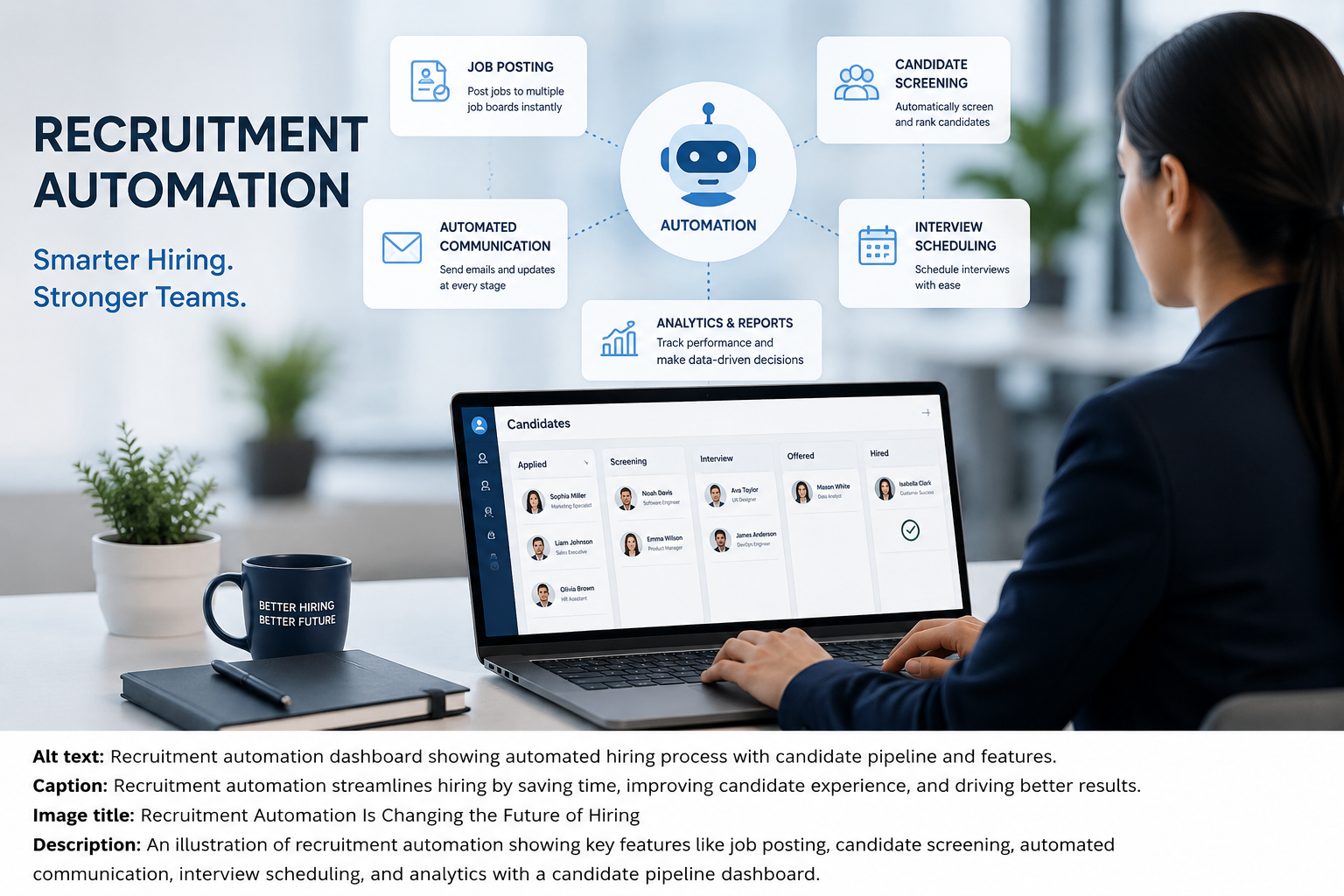
Hiring new employees has never been easy. Companies often spend many hours reading resumes, replying to emails, scheduling interviews, and tracking job applicants. These tasks can take a lot of time and money. In the past, most of the hiring process was done by hand. Today, things are changing very fast because of recruitment automation.
Recruitment automation uses software and digital tools to help businesses hire workers faster and more efficiently. Many companies now use automation to post jobs, screen resumes, contact candidates, and organize interviews. These tools help hiring teams save time and improve the hiring experience for both employers and job seekers.
As technology continues to grow, recruitment automation is becoming a major part of the future of hiring. Businesses of all sizes are starting to depend on automated systems to compete in today’s fast-moving job market.
What Is Recruitment Automation?
Recruitment automation is the use of technology like Breezy HR to handle hiring tasks that were once done manually. These tasks include posting job openings, sorting resumes, sending emails, and scheduling interviews.
Many companies use recruitment software to automate repetitive work. Instead of spending hours reviewing every application, hiring teams can use automated systems to quickly identify qualified candidates.
Automation does not replace human recruiters completely. Instead, it helps them work more efficiently. Recruiters still make the final hiring decisions, but automation helps reduce the amount of manual work involved.
This makes the hiring process faster, more organized, and easier to manage.
Why Businesses Are Turning to Automation
Many businesses are struggling to hire workers quickly. Some companies receive hundreds of applications for a single job opening. Reviewing all these applications manually can take days or even weeks.
Recruitment automation helps solve this problem. Automated systems can scan resumes and shortlist candidates based on skills, education, and work experience.
Businesses also want to reduce hiring costs. Long hiring processes can be expensive. Delays may cause companies to lose talented workers to competitors.
Automation helps companies move faster and communicate with candidates more effectively. This improves the chances of hiring the right people before another company does.
Faster Hiring Processes
One of the biggest benefits of recruitment automation is speed. Automated systems can complete tasks in minutes that would normally take hours.
For example, job postings can be shared across multiple job websites automatically. Emails can also be sent instantly to candidates after they apply.
Interview scheduling tools help recruiters avoid long email conversations when setting up meetings. Candidates can simply choose available interview times online.
Faster hiring is important because top candidates usually apply to several jobs at the same time. Companies that move slowly may miss the chance to hire skilled workers.
Automation helps businesses reduce delays and improve the hiring timeline.
Better Candidate Experience
Job seekers also benefit from recruitment automation. Many people become frustrated when companies take too long to respond after receiving applications.
Automated communication tools help companies keep candidates updated during the hiring process. Applicants can receive confirmation emails, interview reminders, and status updates automatically.
This creates a better experience for candidates because they feel informed and respected.
Some recruitment platforms also make job applications easier to complete. Candidates can apply online using mobile devices and upload resumes quickly.
A smoother hiring experience can improve a company’s reputation and attract more talented applicants in the future.
Improved Resume Screening
Resume screening is one of the most time-consuming parts of hiring. Recruiters often need to review large numbers of resumes to find qualified candidates.
Recruitment automation tools can scan resumes automatically and identify applicants who match job requirements. These systems look for keywords, experience, education, and skills related to the position.
This helps recruiters focus on the best candidates instead of spending hours reading every application manually.
Automated screening also reduces human error. Sometimes recruiters may overlook qualified candidates because they are tired or overwhelmed by too many applications.
Automation makes the process more consistent and organized.
The Role of Artificial Intelligence in Hiring
Artificial intelligence, also called AI, is becoming an important part of recruitment automation. AI-powered systems can analyze large amounts of data and help companies make hiring decisions more efficiently.
Some AI tools can predict whether a candidate may be a good fit for a company based on skills and previous experience.
Chatbots are also becoming common in recruitment. These tools can answer candidate questions, provide updates, and guide applicants through the hiring process at any time of the day.
AI can also help reduce repetitive tasks for recruiters so they can spend more time building relationships with candidates.
As AI technology improves, many experts believe it will continue changing how businesses hire employees.
Challenges of Recruitment Automation
Even though recruitment automation offers many benefits, it also comes with challenges.
Some companies rely too heavily on automated systems. This can make the hiring process feel less personal for job seekers. Candidates still want human interaction during interviews and communication.
Automation tools may also reject qualified candidates if resumes do not match certain keywords. This can cause companies to miss talented people.
Another challenge is data privacy. Recruitment systems collect personal information from applicants, so companies must protect this data carefully.
Businesses also need to train employees on how to use recruitment software correctly. Poor use of automation tools can create mistakes and confusion.
Companies should balance technology with human judgment to achieve better hiring results.
How Small Businesses Benefit From Automation
Recruitment automation is not only for large companies. Small businesses are also using these tools to improve hiring.
Small companies often have limited staff and smaller budgets. Automation helps them save time and reduce workload.
For example, small business owners can use automated tools to post jobs, track applicants, and schedule interviews without needing a large HR department.
This allows smaller companies to compete with larger businesses when searching for talented workers.
Many recruitment platforms also offer affordable pricing plans for startups and growing businesses.
As technology becomes cheaper and easier to use, more small businesses are expected to adopt recruitment automation.
The Future of Remote Hiring
Remote work has changed the way companies hire employees. Many businesses now recruit workers from different cities and countries.
Recruitment automation helps manage remote hiring more efficiently. Video interview platforms, online assessments, and digital onboarding tools allow companies to hire employees without meeting them in person.
Automated scheduling tools make it easier to arrange interviews across different time zones.
Remote hiring also increases competition because companies can access a larger talent pool. Businesses must therefore move quickly to attract skilled candidates.
Automation helps companies stay organized while handling large numbers of remote applications.
As remote work continues to grow, recruitment automation will become even more important.
The Importance of Data and Analytics
Modern recruitment tools can collect valuable hiring data. Companies can track how long it takes to hire workers, where candidates come from, and which job ads perform best.
This information helps businesses improve their hiring strategies.
For example, if a company notices that one job website brings better candidates, it can focus more on that platform in the future.
Analytics also help companies identify hiring problems and improve decision-making.
Data-driven hiring is becoming more popular because businesses want better results from their recruitment efforts.
Automation makes it easier to collect and analyze this information quickly.
Human Recruiters Still Matter
Even with advanced technology, human recruiters still play an important role in hiring.
Automation can handle repetitive tasks, but it cannot fully replace human communication and judgment. Recruiters understand emotions, personality, and company culture in ways that software cannot fully measure.
Candidates also value personal conversations during interviews and negotiations.
Successful companies use automation to support recruiters instead of replacing them completely.
The best hiring strategies combine technology with human skills. This creates a more balanced and effective recruitment process.
In Summary
Recruitment automation tools like Breezy HR are changing the future of hiring in many ways. Businesses are using technology to save time, reduce hiring costs, improve communication, and find qualified candidates faster.
Automation tools help companies stay competitive in today’s fast-moving job market. From resume screening to interview scheduling, many hiring tasks can now be completed more efficiently with digital systems.
At the same time, companies must use automation carefully. Human interaction still matters, and businesses should avoid relying too heavily on software alone.
As technology continues to improve, recruitment automation will likely become even more common around the world. Companies that learn how to combine automation with human decision-making will be better prepared for the future of hiring.