Running a modern business is no longer just about having a good product or service. Companies today also need the right digital tools to improve productivity, manage teams, support customers, track marketing results, and increase sales. This is where SaaS tools become important.
SaaS stands for Software as a Service. These are online platforms that businesses can use through the internet without installing complex software on company computers. Most SaaS tools work on a subscription model, making them affordable and easy to scale for both small and large companies.
The right SaaS tools can help businesses save time, reduce manual work, improve communication, and make better decisions. From customer support and marketing to recruitment and website monitoring, there are tools designed for almost every business need.
In this article, we will look at 10 of the best SaaS tools every modern company should consider adopting.
How We Selected These SaaS Tools
Choosing the right SaaS tools for this list involved looking at several important factors that matter to modern businesses. We focused on tools that help improve productivity, simplify operations, support growth, and save time for companies of different sizes. We also considered ease of use, business value, automation features, scalability, and overall usefulness in daily operations. Another important factor was whether the platforms solve real business problems in areas such as customer support, marketing, billing, hiring, and workflow management. The goal was to include tools that businesses can realistically use to improve efficiency and support long-term growth.
Why You Should Trust Us
We understand that businesses need practical tools that can deliver real value instead of creating more complexity. That is why this list focuses on SaaS platforms designed to improve everyday business operations in useful and measurable ways. We carefully reviewed each platform based on its business purpose, usability, and ability to help companies work more efficiently. Rather than focusing only on popularity, we looked at how these tools can support productivity, customer management, marketing, team collaboration, and overall business growth. Below, you will find some of the best SaaS tools companies should consider utilizing.
1. Help Center
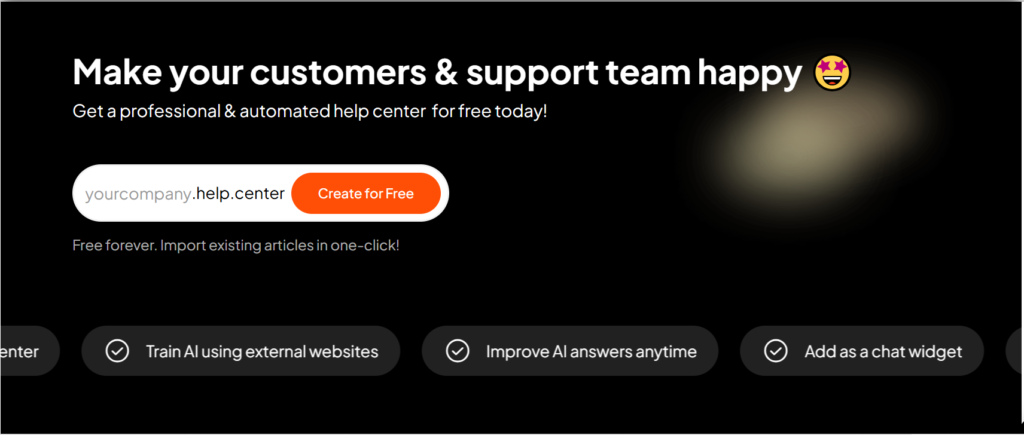
Help.center is a customer support and knowledge base platform designed to help businesses create helpful self-service content for their users. Instead of answering the same customer questions repeatedly, companies can build organized help centers where customers can find answers on their own.
This tool is useful for startups, SaaS businesses, ecommerce brands, and service companies that want to improve customer experience. A well-organized help center can reduce support tickets and save customer support teams a lot of time.
One of the biggest advantages of Help.center is its simple setup process. Businesses can quickly create articles, guides, FAQs, and tutorials without needing advanced technical skills. The platform also offers customization options so companies can match the help center with their brand identity.
Another benefit is that customers can access support information anytime, even outside business hours. This improves customer satisfaction and helps companies appear more professional and organized.
For businesses that receive many customer questions every day, Help.center can become an important tool for improving support operations and reducing workload.
2. Ataraxis Management
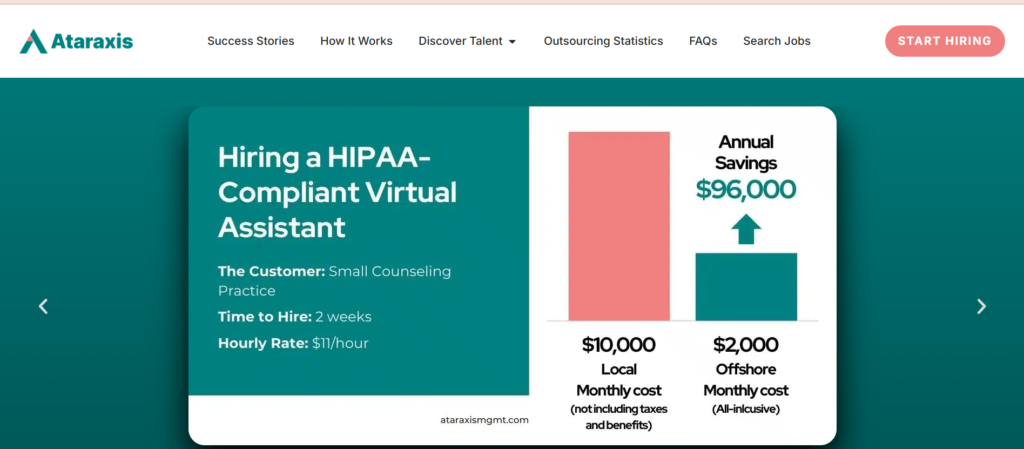
Ataraxis Management is a business management platform designed to help companies improve organization and workflow management. Businesses often struggle with scattered tasks, communication problems, and inefficient processes. This tool helps solve those issues by bringing important business functions into one system.
The platform helps teams manage projects, organize tasks, monitor performance, and improve team collaboration. Instead of switching between many different apps, companies can centralize their work in one place.
Ataraxis Management is especially useful for growing businesses that need better structure as their teams expand. Managers can track progress, assign responsibilities, and monitor deadlines more efficiently.
Another advantage of the platform is improved communication between departments. Team members can stay updated on tasks and projects without relying heavily on long email chains or constant meetings.
Businesses that want to improve productivity and reduce confusion within teams may find this platform very valuable. Better organization often leads to faster decision-making and smoother operations across the company.
3. SEO Space
SEOspace is an SEO and website optimization platform that helps businesses improve their search engine rankings. In today’s digital world, appearing on search engines like Google is very important for attracting customers and increasing website traffic.
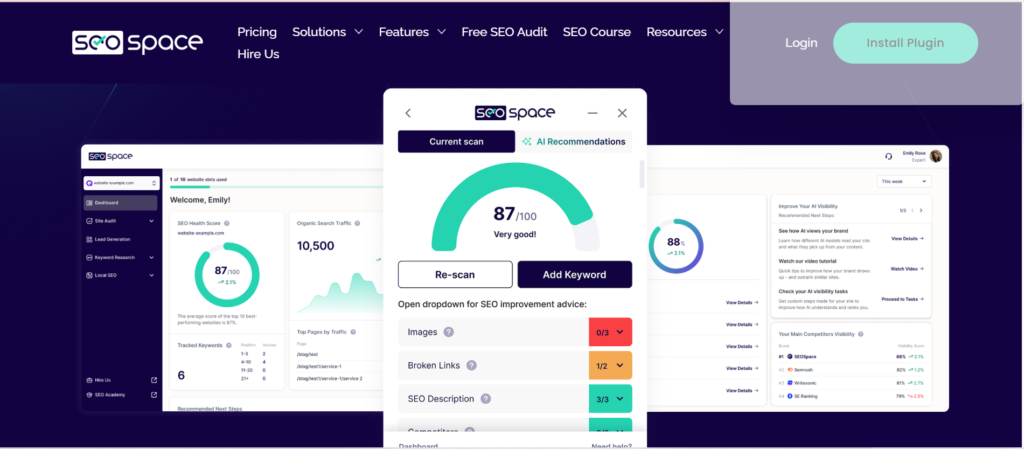
SEOspace helps businesses identify keywords, track rankings, analyze competitors, and improve website content for better visibility online. This is useful for businesses that depend on organic traffic to generate leads and sales.
One of the main benefits of SEOspace is that it simplifies SEO for beginners. Many SEO platforms can feel complicated, but SEOspace focuses on making the process easier to understand. This allows small businesses and startups to improve their online presence without needing a large marketing team.
The platform also helps users monitor website performance and discover areas that need improvement. Businesses can use this information to create better content and increase their chances of ranking higher in search results.
For companies that want long-term online growth, SEOspace can be an important tool for digital marketing success.
4. Easify
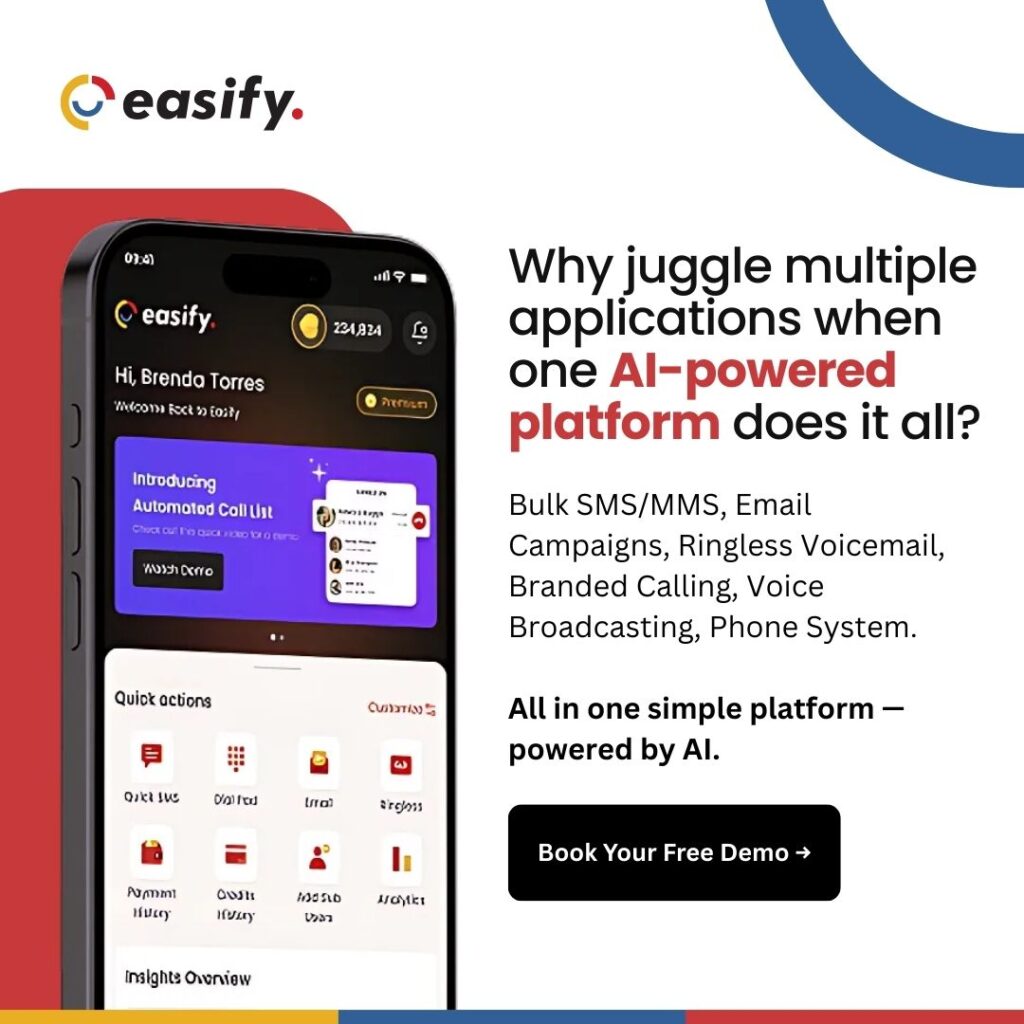
Easify is a business productivity and workflow management tool designed to simplify daily operations. Many businesses waste time dealing with repetitive tasks, manual processes, and poor organization. Easify helps companies streamline these activities and improve efficiency.
The platform offers tools for managing workflows, organizing tasks, and improving collaboration between team members. Businesses can automate certain processes and reduce the amount of manual work employees need to handle.
One reason many companies may like Easify is its user-friendly interface. Teams can learn how to use the platform quickly without spending weeks on training. This makes it suitable for businesses of different sizes.
Another benefit is improved productivity. Employees can focus more on important work instead of spending too much time on repetitive administrative tasks.
As businesses grow, managing operations becomes more challenging. Easify helps reduce confusion and keeps workflows organized, making it easier for companies to scale their operations successfully.
5. Billing Now
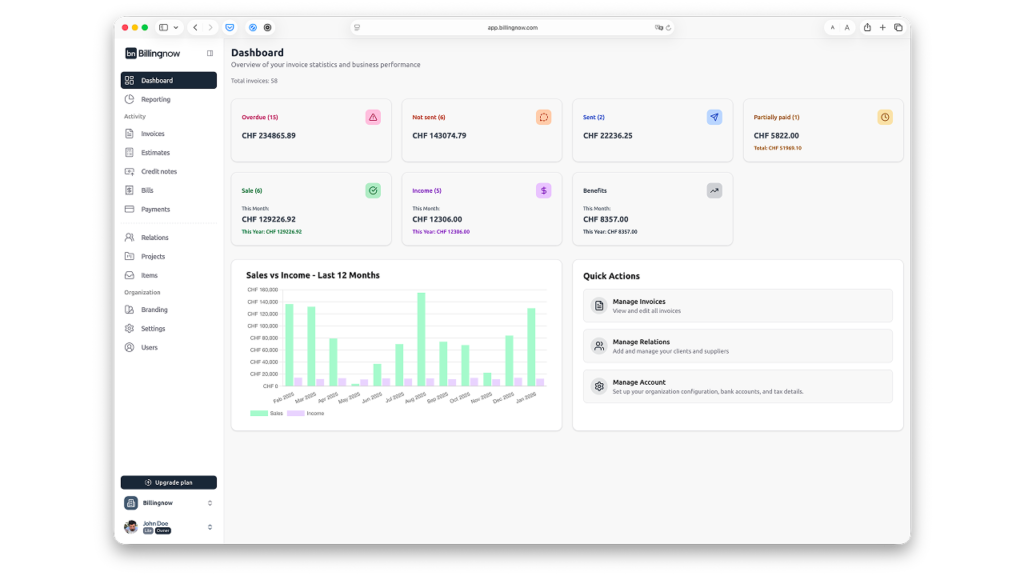
Billing Now is a billing and invoicing platform that helps businesses manage payments more efficiently. Financial management is one of the most important parts of running a company, and handling invoices manually can become stressful and time-consuming.
This platform allows businesses to create invoices, track payments, manage subscriptions, and organize financial records in one place. It helps reduce errors and improve payment tracking.
One major advantage of Billing Now is automation. Businesses can automate recurring invoices and payment reminders, helping them avoid missed payments and delayed transactions. This can improve cash flow and reduce financial stress.
The platform is also useful for subscription-based businesses that need recurring billing systems. Instead of handling payments manually every month, companies can automate the process and save valuable time.
Clear financial records are important for business growth and decision-making. Billing Now helps businesses stay organized and maintain better control over their finances.
6. Uptime Robot
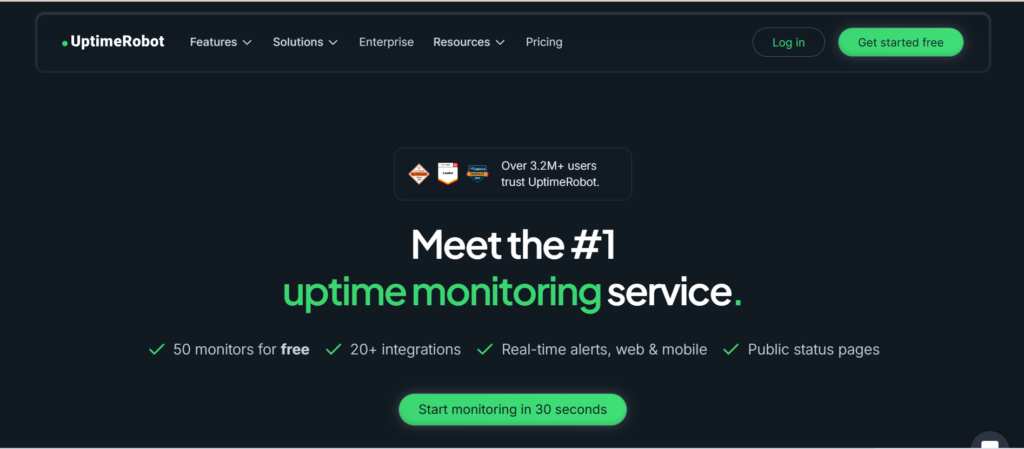
UptimeRobot is a website monitoring platform that helps businesses ensure their websites stay online and functional. In today’s internet-driven business environment, website downtime can lead to lost customers, reduced trust, and lower revenue.
This tool monitors websites, servers, and online services around the clock. If a website goes offline or experiences technical problems, the platform sends alerts immediately so businesses can respond quickly.
One of the biggest benefits of UptimeRobot is peace of mind. Business owners do not need to constantly check whether their website is working because the system handles monitoring automatically.
The platform is useful for e-commerce stores, SaaS companies, blogs, and any business that depends on online traffic. Even a few hours of downtime can hurt customer trust and reduce sales opportunities.
UptimeRobot also provides performance monitoring features that help businesses identify recurring technical problems. This allows companies to improve website reliability and create a better experience for users.
For businesses that rely heavily on their online presence, website monitoring tools like UptimeRobot are extremely important.
7. Lucro CRM
Lucro CRM is a customer relationship management platform designed to help businesses manage customer interactions and sales activities. Building strong customer relationships is essential for long-term business success, and CRM tools make this process easier.
The platform allows businesses to store customer information, track communication history, manage leads, and monitor sales pipelines. This helps sales teams stay organized and follow up with potential customers more effectively.
One important advantage of Lucro CRM is improved customer communication. Businesses can better understand customer needs and provide more personalized service.
The platform also helps companies track sales performance and identify areas where improvements are needed. Managers can review sales data and make better business decisions based on accurate information.
For growing businesses, keeping customer information organized becomes increasingly important. Lucro CRM helps companies avoid losing valuable leads and improves overall sales management.
Businesses that want to improve customer retention and sales efficiency may benefit greatly from using a CRM platform like Lucro CRM.

8. Buzz AI
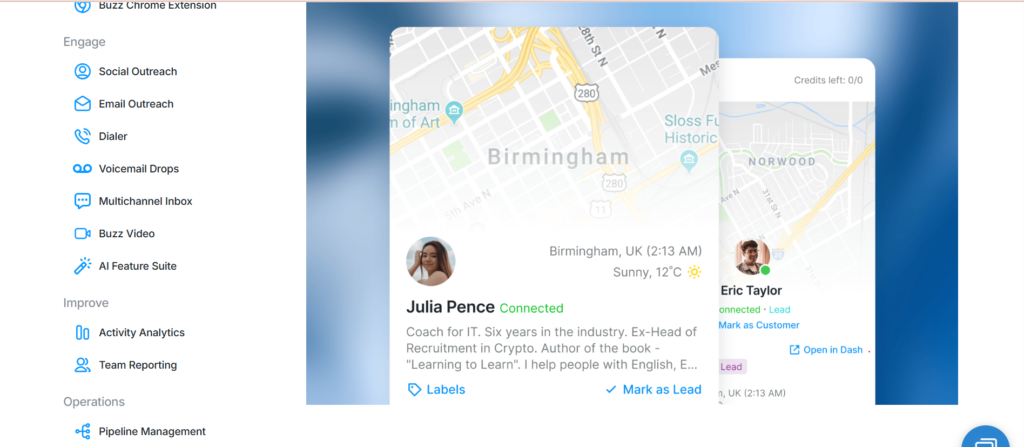
Buzz.ai is an AI-powered outreach and lead generation platform designed to help businesses find and connect with potential customers. Generating quality leads is one of the biggest challenges for many companies, especially in competitive industries.
The platform uses artificial intelligence to help businesses automate outreach campaigns across different channels. This includes email outreach, lead discovery, and customer engagement processes.
One major benefit of Buzz AI is time savings. Instead of manually searching for leads and writing every outreach message individually, businesses can automate much of the process.
The platform can also help businesses improve targeting by identifying more relevant leads. Better targeting often leads to higher response rates and improved sales opportunities.
Another advantage is scalability. As businesses grow, manual outreach becomes harder to manage. Buzz.ai allows companies to handle larger outreach campaigns without needing massive sales teams.
For businesses focused on growth and customer acquisition, AI-powered outreach tools like Buzz.ai can provide a competitive advantage.
9. AdCreative AI
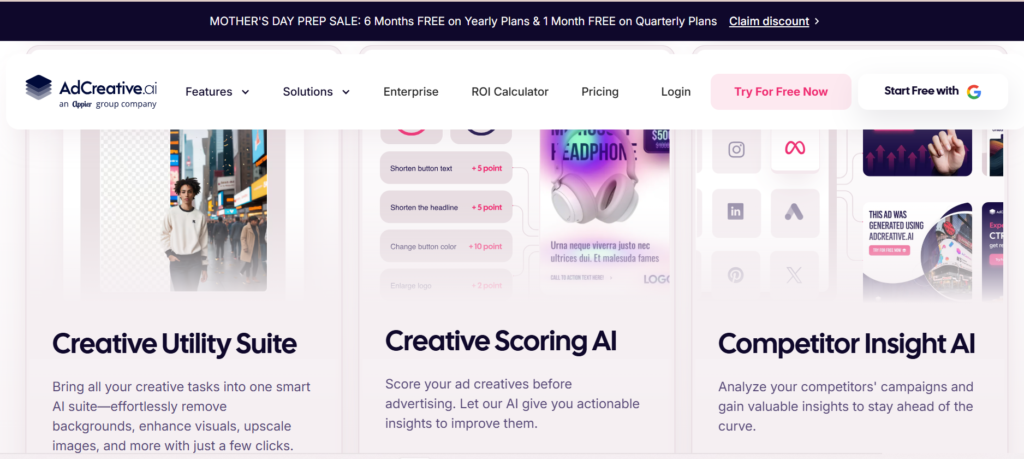
AdCreative.ai is an AI-powered advertising creative platform that helps businesses create marketing visuals and ad copy more efficiently. Digital advertising is very competitive, and businesses need strong visuals to capture customer attention.
The platform uses artificial intelligence to generate ad creatives designed to improve marketing performance. Businesses can create social media ads, display ads, and promotional graphics faster than traditional design methods.
One important advantage of AdCreative.ai is speed. Companies can generate multiple ad variations quickly instead of spending many hours designing graphics manually.
The platform is also useful for businesses with limited design resources. Small businesses and startups may not have full-time graphic designers, so AI-generated creatives can help reduce workload and costs.
Another benefit is improved marketing testing. Businesses can create different ad versions and test which designs perform best with customers.
For companies running online advertising campaigns, AdCreative.ai can help improve efficiency and increase marketing output.
10. Breezy HR
Breezy.hr is a recruitment and hiring platform designed to help businesses simplify the hiring process. Finding and managing talent can become difficult as companies grow, especially when handling many applications at once.
The platform helps businesses post job openings, review applications, schedule interviews, and communicate with candidates from one dashboard. This improves organization and reduces hiring delays.
One of the biggest benefits of Breezy HR is better recruitment efficiency. Hiring teams can collaborate more easily and track candidate progress throughout the recruitment process.
The platform also improves candidate experience by making communication smoother and more professional. A positive hiring experience can help businesses attract better talent.
Another advantage is automation. Businesses can automate repetitive recruitment tasks, allowing HR teams to focus more on selecting the right candidates.
For companies that plan to grow their workforce, Breezy HR can make recruitment more organized and less stressful.

In Summary
Technology continues to change how businesses operate, and SaaS tools are now an important part of modern business success. Companies that use the right digital platforms can improve productivity, save time, strengthen customer relationships, and manage operations more effectively.
The tools discussed in this article each serve different business needs. Some focus on customer support, while others help with marketing, billing, recruitment, SEO, or workflow management. Together, they show how SaaS platforms can support many areas of business growth.
As competition continues to increase in 2026, businesses that invest in useful software solutions may have a better chance of staying efficient and competitive. Choosing the right tools depends on the company’s goals, budget, and operational needs.
Whether you are running a startup, a small business, or a growing company, these SaaS tools can help simplify operations and support long-term growth.
Frequently Asked Questions (FAQs)
1. What is a SaaS tool?
A SaaS tool is software that users access through the internet instead of installing it directly on their computers. SaaS stands for Software as a Service. Businesses usually pay a monthly or yearly subscription fee to use the software. These tools are popular because they are easy to use, easy to update, and accessible from almost anywhere. Companies use SaaS tools for customer support, accounting, communication, marketing, project management, and many other business activities. SaaS platforms also reduce the need for expensive hardware and technical maintenance.
2. Why are SaaS tools important for businesses?
SaaS tools help businesses save time, improve productivity, and reduce manual work. Many companies use these tools to automate repetitive tasks and improve collaboration among employees. SaaS platforms also make it easier for teams to work remotely because employees can access systems from different locations. Another advantage is cost efficiency since businesses do not need to buy expensive software licenses or maintain physical servers. By using SaaS tools, companies can focus more on growth and customer service instead of spending too much time managing technology systems.
3. Are SaaS tools suitable for small businesses?
Yes, SaaS tools are very suitable for small businesses. In fact, many small businesses depend on SaaS platforms because they are affordable and easy to scale. Small companies often have limited budgets and smaller teams, so cloud-based software helps them access professional business tools without high upfront costs. SaaS tools also allow small businesses to compete more effectively with larger companies. Whether it is accounting, marketing, customer support, or hiring, small businesses can use SaaS tools to improve operations and manage tasks more efficiently while keeping expenses under control.
4. How do SaaS tools improve productivity?
SaaS tools improve productivity by automating tasks and helping teams work more efficiently. For example, project management platforms organize workflows, communication tools improve team discussions, and billing software reduces manual accounting work. Employees spend less time on repetitive tasks and more time focusing on important business goals. SaaS tools also help businesses centralize information so team members can easily access files, updates, and customer data. Better organization and faster communication often lead to improved teamwork and higher productivity across the company.
5. Is SaaS software secure for businesses?
Most SaaS providers invest heavily in security because businesses trust them with important data. Many SaaS platforms use encryption, secure servers, data backups, and multi-factor authentication to protect user information. However, businesses should still choose trusted providers with good security reputations. Companies should also train employees on safe online practices such as using strong passwords and avoiding suspicious links. While no system is completely risk-free, many SaaS tools provide strong security measures that are often better than what smaller businesses could manage on their own.
6. Can SaaS tools help remote teams?
Yes, SaaS tools are extremely useful for remote teams. Since these platforms work online, employees can access them from different locations using laptops, tablets, or smartphones. Communication tools allow remote workers to stay connected through messaging and video meetings. Project management platforms help teams organize tasks and track progress even when employees are working from home. Cloud storage services also make it easier to share documents and collaborate in real time. SaaS technology has become one of the main reasons remote work is possible for many modern companies.
7. How do businesses choose the right SaaS tools?
Businesses should choose SaaS tools based on their needs, budget, and long-term goals. The first step is identifying the specific problems the company wants to solve. For example, a business struggling with customer communication may need a CRM or support platform. Companies should also compare pricing, features, ease of use, and customer reviews before making a decision. Free trials can help businesses test whether a tool fits their workflow. It is also important to choose software that can grow with the business as operations expand over time.
8. Are SaaS tools expensive?
The cost of SaaS tools depends on the platform and the features offered. Some tools are affordable for startups and small businesses, while others may cost more for advanced enterprise features. However, SaaS platforms are often more cost-effective than traditional software because businesses avoid expensive installations and hardware costs. Many SaaS companies also offer flexible pricing plans so businesses can choose packages that match their budgets. Some platforms even provide free versions with limited features, allowing smaller businesses to start using the software without major financial pressure.
9. What industries benefit most from SaaS tools?
Almost every industry can benefit from SaaS tools. Technology companies, e-commerce businesses, healthcare providers, educational institutions, marketing agencies, and financial firms all use cloud-based software in different ways. Retail businesses use SaaS platforms for inventory and customer management, while marketing teams use them for analytics and advertising campaigns. Human resource departments use SaaS recruitment systems, and customer service teams rely on support platforms. Because SaaS tools are flexible and scalable, they can support businesses of different sizes and industries around the world.
10. What is the future of SaaS technology?
The future of SaaS technology looks very strong as more businesses continue moving toward cloud-based systems. Artificial intelligence is expected to become a bigger part of SaaS platforms, helping companies automate tasks and analyze data more effectively. Businesses are also likely to demand better integration between different tools so information can flow more smoothly across systems. Mobile access, cybersecurity improvements, and personalized user experiences will continue growing in importance. As technology advances, SaaS tools will probably become even more important for companies that want to stay competitive and efficient.